
COACHING SKILLS | KEY QUESTIONS TO ASK
Our July blogpost made the bold statement that the primary shift FSP’s need to make to future proof their business (through a new value proposition), is to move from selling products to enabling financial wellbeing for their clients. At the heart of this is knowing the client better and being able to influence financial behaviour that will lead to outcomes that will help clients have a life well lived. This requires FSP’s to consider adopting a coaching approach when engaging with clients on their journey to financial wellbeing.
In this blogpost, we invite you to consider a life planning approach to your practice and taking on a financial coaching role when engaging with your current and future clients.
But what does a coaching approach entail and what skills do advisors need to develop to meet the changing expectations that clients have, as mentioned in part 2 of this series?
THE CONCEPT OF COACHING
The concept of coaching originally comes from the word that is used to describe a horse drawn carriage, and carries with it the symbolism of being a supportive structure that moves a person from one point to another. There are many nuanced definitions of coaching out there, but the International Coaching federation defines coaching as “An ongoing partnership that helps clients to produce fulfilling results in their personal and professional lives. Through the process of coaching, clients deepen their learning, improve their performance, and enhance their quality of life”. The essence of coaching is therefore to help a person change in the way they wish and helping them go in the direction they want to go.
This definition is highly similar to how the concept of Life planning is defined in literature as being the process of:
- Helping people focus on the true values and motivations in their lives.
- Determining the goals and objectives they have as they see their lives develop.
- Using these values, motivations, goals and objectives to guide the planning process and provide a framework for making choices and decisions in life that have financial and non-financial implications or consequences.
THREE KEY SKILLS WHEN ADOPTING A COACHING APPROACH
1. Self-Awareness & knowing your Advice Monster
The first key skill is Self-Awareness. For the advisor this means to firstly think about their own style of giving advice.
Our blogpost topic implies that a financial advisor has the choice to change and adjust how they work, and any change always starts with looking inward. Self-awareness can be increased by asking oneself the following questions:
- What is my style or approach when giving advice?
- How aligned is that to having a coaching approach?
- What is the gap between these two approaches?
- Do I want to shift my style to adopt more of a coaching approach?
In his book and Ted Talk, The Advice Trap, Michael Bungay Stainer refers to the Advice Monster that lures in all of us and that shapes our advice-giving style. It’s that thing we all have inside of us, that at the moment when someone starts talking about what they need, we start to think about what our answer is going to be.
Self-awareness starts by recognising that we all have the advice monster in us. Giving advice can go bad if we try to solve the wrong problem by just jumping in with advice or when we think our advice is better than what it actually is (due to our own biases).
Three different personas that often show up, are:
Tell-It: This persona usually shows up if you believe that the only way you can add value to your client is by having all the answers to all their questions. And if you don’t have the answers, you fail.
Save it: This one shows up when you believe that it is your job to rescue everybody, that your client depends on you to save the day, or to save them from not being able to retire. If your client struggles to achieve their financial goals or financial wellbeing, you fail.
Control it: The last persona is one where we think the way we win is to maintain control of our client's decisions. The process of decision making and maybe even the outcomes of those decisions, is part of what we attempt to control.
When someone continuously practice these ways of giving advice, it may have an even deeper impact and message that goes out to the person sitting across from them. That message is “you are not good enough or smart enough to figure this out…I’m better than you and I will tell you, save you and control what happens for you”. These three styles may come in handy in some of the other roles that you take on, especially when you must be the consultant or the administrator, but as primary styles, they will not support you when you show up as a financial coach.
Having self-awareness, about your style of giving advice, is the first foundational skill to have as basis for a coaching approach and is also likely to add to your value proposition. Research has shown that where a planner would share his or her values and priorities, this was highly correlated with trust and commitment to the relationships from both the client and the planner.
Action: Increase your self-awareness by asking for feedback from colleagues who work with you or even from trusted clients, about your style of giving advice and whether they see the Advice Monster in you at times.
2. Client centricity
Being client centric in the financial advisory context assumes that an advisor makes it a priority to understand the needs, expectations, and relationship preferences that their clients have at each stage of life. It also assumes that he or she looks for the uniqueness of the individual in terms of their personality and values because they understand that this has a huge impact on the quality of financial decisions that clients make. In knowing and understanding the client, the advisor is then able to bring that knowledge and insight into the planning process to tailor their offering so to match the type of relationship that the client desires.
Relationships in its most basic form comes down to interpersonal connections and high-quality conversations. Despite modern development in automated and AI based advice, research confirmed that people still want someone to talk to who will explain difficult concepts to them and understand them as individuals, rather than a stereotyped demographic or pre-programmed investment profile.
What can be done to practically enhance client centricity?
A first very practical way one can understand the uniqueness of the individual in front of you better, is to use a common language between the client and planner to describe themselves and their financial behaviour. In the field of behavioural finance many organisations are developing what is called behavioural profiles or personas through which they can quickly get a grasp on the typical investment or financial behaviours of their client.
Michael Pompian is known for his work on Behavioural Investor Types that categorises clients into one of four personas that provides insights into the cognitive and emotional biases that may impact on your client’s behaviour.
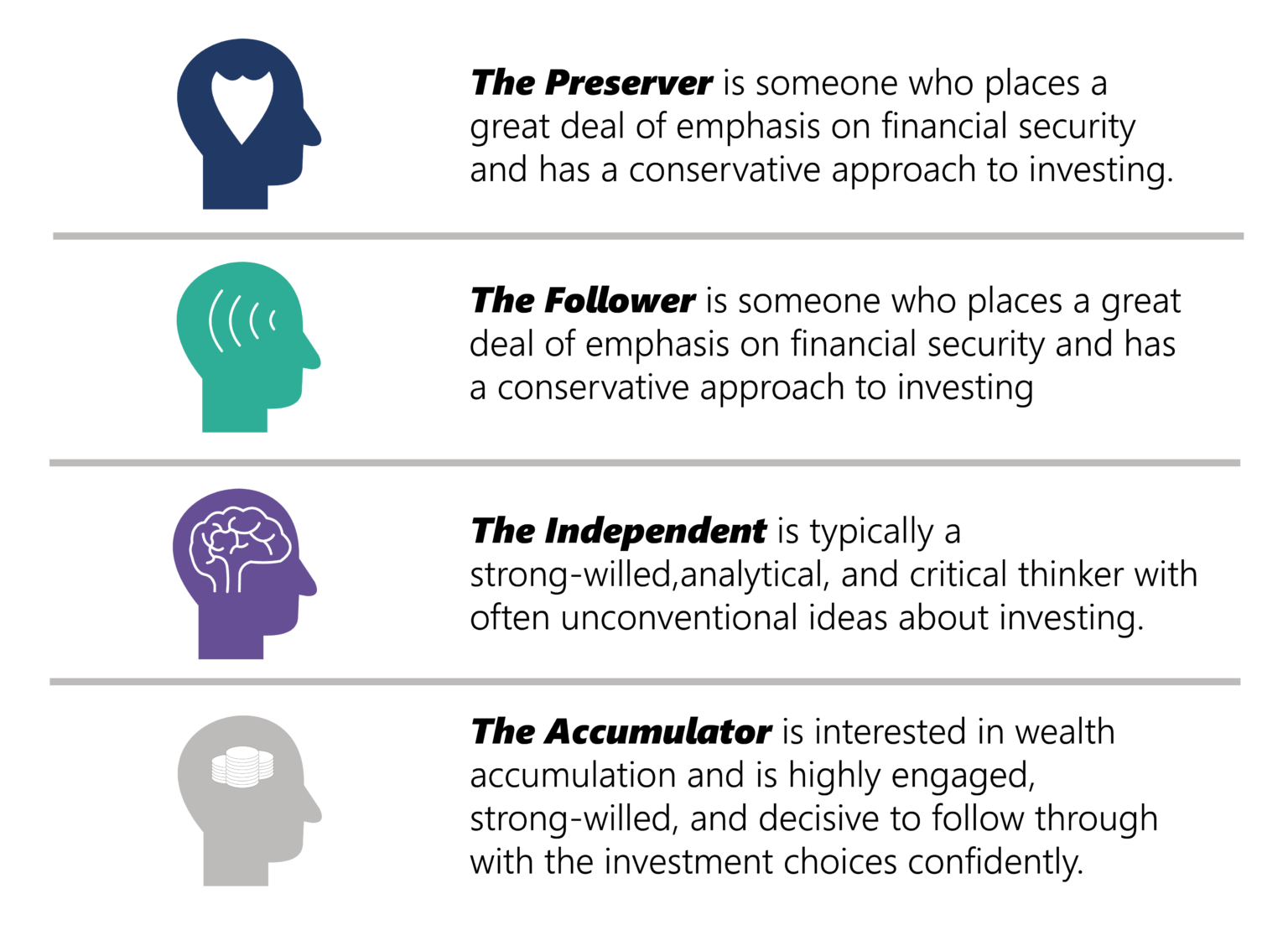
Action: If you are interested in using instruments like this, please reach out to us, as Amity will shortly start a project to create our own instrument to determine and describe investment behaviours. We can refer you also to existing ones to start your process of exploring client behavioural preferences.
Move Beyond traditional topics
The research being done on the practice of Life Planning, indicates that clients are more and more willing to incorporate topics that was previously not regarded as part of this scope of a financial planning discussion. So apart from the normal conversation of planning for retirement, the conversation could also include topics such as future goals and aspirations, job transitions and new career aspirations, how they currently manage their money and family members’ finances.
Action: Consider the typical topics that you include in your conversation with clients. Consider expanding these to topics that includes a more holistic picture of the client’s life and the planning necessary to help them live that life and reach their life goals.
Relationship Building
The third foundational skill is really a collection of micro-skills that I lumped under the term Relationship Building. Be mindful of WHERE you meet with clients. This is an element that went through dramatic changes in the last two years with meetings moving online instead of in person. The jury is still out on what the real impact and value is between online and in person meetings, and it is highly influenced by the nature of the conversation. However, it remains important that the client experience the meeting space, whether online or in person, as comfortable and encouraging openness. It should be non-threatening and in some instances private.
Whether one is meeting online or in person, having an open and non-judgemental listening posture creates a positive environment for interaction. The skills of active listening can really be condensed in the ability to listen and then reflect. One can use phrases like “can I summarise what I’ve heard from you?” or “if I can say it in my own words, I would say it as follows”. When reflecting back to your client, it is very important to use language that the client will understand and not financial jargon.
Asking high quality questions - borrowed from the author Michael Bungay Stainer’s book The Coaching Habit. The foundations for a coaching approach to advice is to stay curious a little longer in the conversation where you are supposed to give the advice. The best way to stay curious a while longer, is to ask high quality questions. This is also the number 1 skill to tame the advice monster.
As an end to our 3-part blog series, we have also made a document available for download here: KEY QUESTIONS TO USE AS PART OF YOUR COACHING APPROACH.
The Amity Advisor Experience team will assist with any queries you may have!
Go to our contact us page to find the necessary details.
ABOUT THE AUTHOR
